.png)
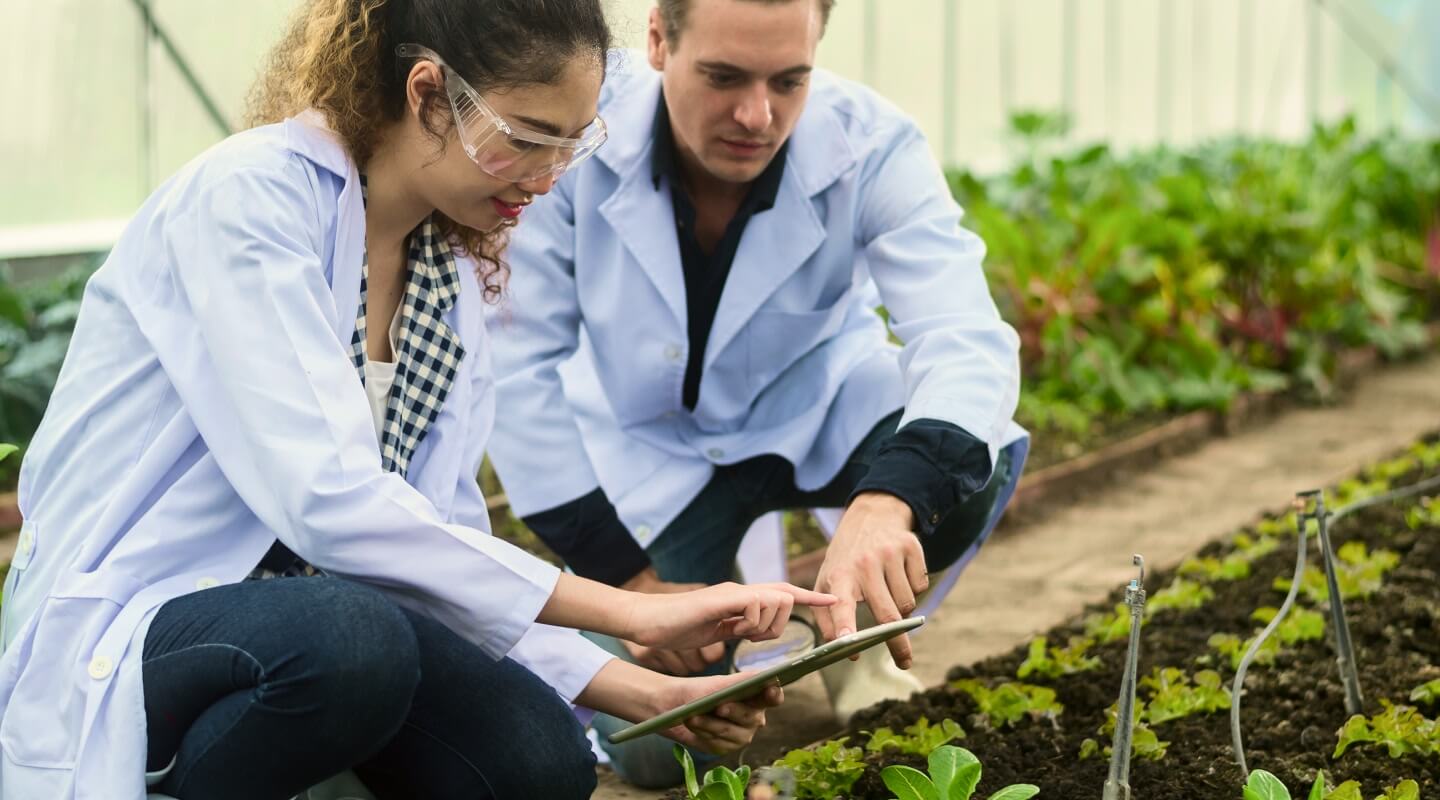
As droughts intensify and water becomes increasingly scarce, agriculture faces mounting pressure to do more with less. This is especially true in California, where agriculture accounts for roughly 80% of all water used by people and businesses.[1] In this challenging context, indoor farming—including greenhouses, vertical farms, and other controlled environments—has emerged as a promising solution, offering dramatic improvements in water efficiency.
The data supporting indoor farming's water-saving potential is compelling. Over the past decade, studies and commercial operations have consistently demonstrated that these systems can reduce water usage by 70-95% compared to traditional field farming.[2] This dramatic difference comes primarily from recirculating water systems where runoff and loss are virtually eliminated.
Consider this striking comparison: a head of lettuce grown in a modern indoor farm might require only 1-2 liters of water, compared to 20+ liters when grown in an outdoor field under arid conditions. When multiplied across thousands of plants and multiple growing cycles per year, the water savings become truly significant.
But the benefits go beyond just using less water. Indoor systems deliver higher water productivity—more crop per drop. By precisely tailoring water and nutrient delivery to plant needs, these systems avoid overwatering while creating optimal growing conditions. Plants experience less stress and can direct more energy toward growth rather than survival, often improving yields per unit of water and land.
There is, however, an important trade-off to consider. While indoor farming saves water, it typically requires more energy for lighting, climate control, and water circulation. Some environmental gains in water conservation may be offset by carbon emissions if that energy isn't from renewable sources. Fortunately, ongoing improvements in energy efficiency and renewable integration are helping address this challenge.
The implications of indoor farming's water efficiency extend in several important directions:
The Plant Innovation Center is positioned to accelerate these water-smart farming solutions. Our facilities will feature both advanced greenhouses and indoor farming systems where startups can test and refine new water-efficient technologies. A company developing novel irrigation sensors, for example, could implement and fine-tune them in our controlled environments before scaling to commercial applications.
Our own operations will demonstrate best practices in water conservation, incorporating closed-loop hydroponics, rainwater capture, and water recycling. By "leading by example," we aim to inspire visiting farmers and partners to adopt similar measures in their operations.
The Plant will also support innovations in drought-resilient agriculture through our incubator and pilot programs. We'll help startups working on drought-tolerant crop varieties, precision irrigation systems, and soil moisture analytics develop their technologies faster. Even solutions primarily intended for open fields can benefit from our controlled testing environments.
As we look to the future, several priorities emerge for advancing water-smart farming:
Water-smart farming isn't just an environmental nicety—it's becoming an economic necessity for agriculture's future. The Plant Innovation Center is committed to validating approaches that truly save water while helping innovators implement them at scale. As climate pressures intensify, the solutions developed in hubs like ours will be critical in ensuring food security without depleting precious water resources.
[1] News.ucsb.edu, "Small changes can yield big savings in agricultural water use."
[2] Based on multiple studies including analyses from Columbia University's Earth Institute and commercial vertical farm operations.and innovation, the agri-food sector can rise to meet it.
.svg)