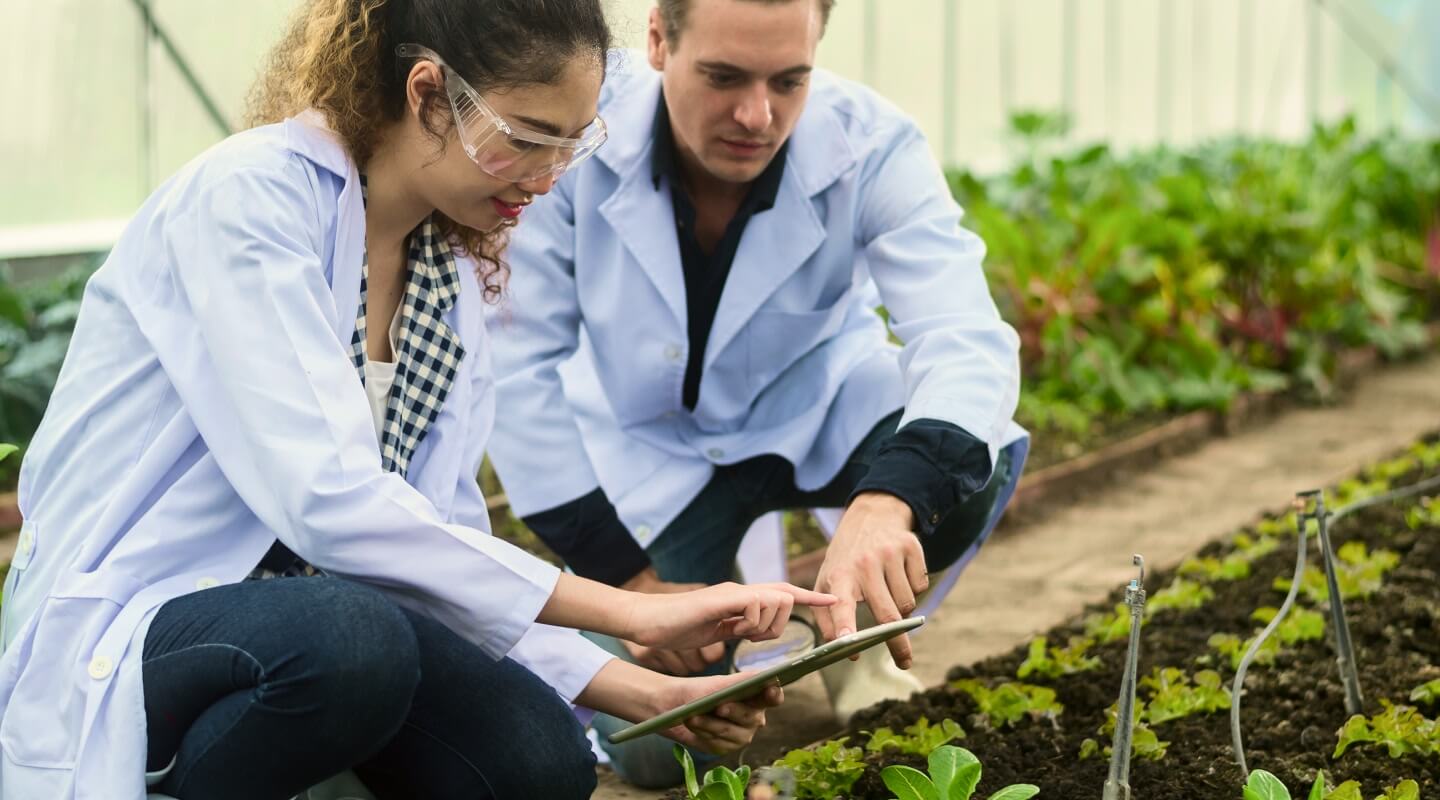
Agriculture faces a dual challenge with climate change: it's both affected by changing weather patterns and contributes to greenhouse gas emissions. Rising temperatures, irregular precipitation, and extreme weather events are already impacting crop yields and livestock productivity across the globe.[1] Meanwhile, agricultural activities account for roughly 10-12% of global greenhouse gas emissions directly, and up to 25-30% when including land use change and the broader food system.
This reality has propelled "climate-smart agriculture" to the forefront of agricultural innovation - an approach that aims to increase the resilience of food systems while simultaneously reducing agriculture's environmental footprint.
Climate Trends and Agricultural Impacts
Recent data paints a clear picture of climate change's effects on farming:
- Crop yields are already suffering. The IPCC has reported that yields of major cereal crops in climate-affected areas are significantly lower than they would be without the approximately 1.1°C of warming experienced to date.[1] If warming reaches 1.5°C, an estimated 8% of the world's farmland could become unsuitable for current agricultural uses.
- Extreme weather events have become more frequent and severe. The 2021 Pacific Northwest heatwave devastated berry and produce farms, while California's recent drought years (2014, 2021) resulted in hundreds of thousands of fallowed acres and billions in economic losses due to water shortages.
- In response, climate mitigation efforts are accelerating. The USDA's Climate-Smart Commodities program, launched in 2022, has committed billions to projects that reduce or sequester carbon in agriculture. Major food corporations have established net-zero goals for their supply chains by 2040-2050, driving climate-smart practices down to the farm level.
Priorities for Agricultural Innovation
These challenges are reshaping priorities in agricultural technology development:
- Climate-Resilient Varieties: There's growing demand for crop varieties that can withstand heat, drought, and salinity, or resist emerging pests that thrive in warmer conditions. Both traditional breeding and gene editing technologies are being deployed to develop these varieties more rapidly.
- Carbon Farming Technologies: New markets for carbon sequestration are creating opportunities for verification and enhancement technologies. Startups are developing monitoring and reporting tools that use remote sensing and soil sampling to quantify carbon storage, while others are creating feed additives to reduce livestock methane emissions.
- Integrated Systems Approaches: Effective climate-smart agriculture requires combining multiple practices and technologies. This means greater collaboration across different innovation domains - biological solutions, digital technologies, and management practices working together to create resilient farming systems.
The Plant's Role in Climate-Smart Agriculture
The proposed Plant Innovation Center would place sustainability and climate solutions at the core of its mission through several key initiatives:
- Accelerating Critical Technologies: The Plant would be designed to support ventures developing water-efficient irrigation systems, nitrogen-fixing microbes and biostimulants that reduce fertilizer use, alternative proteins with lower environmental footprints, and renewable energy integration in agriculture. By providing infrastructure and expertise, The Plant would help these solutions reach markets faster.
- Demonstrating Sustainability: The planned campus itself would model green building principles and clean energy use, targeting high energy efficiency standards and incorporating on-site renewable generation. In its operations, The Plant would emphasize recycling, waste reduction, and circular economy principles - for instance, capturing waste heat or CO₂ from the biomanufacturing facility to use in greenhouses.
- Facilitating Research Collaboration: The proximity to UC Davis and other research institutions would position The Plant as a hub for climate-focused research. The controlled environment spaces could host experiments on crop responses to simulated future climate conditions, while the collaborative model would bring together diverse stakeholders to tackle complex challenges like quantifying the benefits of regenerative practices.
The proposed location in California's Sacramento Valley - a region both highly productive and climate-vulnerable - would provide a unique perspective on adaptation challenges. The solutions developed there could potentially scale to other Mediterranean-climate regions worldwide.
Moving Forward Together
Climate-smart agriculture isn't optional if we want to ensure food security while meeting climate targets. Each stakeholder group has an important role to play:
Farmers and agribusinesses should engage with emerging tools and practices, working with innovation hubs to minimize the risks of adoption. Policymakers need to align incentives with climate-smart practices and view centers like The Plant as partners in validating effective approaches. Technology innovators and investors should recognize that climate challenges present tremendous opportunities for innovation with growing market demand.
The Plant Innovation Center is positioned to be a cornerstone in the transformation to climate-smart agriculture - not only nurturing necessary technologies but embodying the collaborative spirit required to address these complex challenges. Through this work, we're helping ensure that agriculture can withstand tomorrow's climate while mitigating climate change today, demonstrating that economic prosperity and environmental stewardship can indeed go hand in hand.
[1] Time.com, "IPCC Report: Climate Change Is Devastating Agriculture and Farming Communities"
.png)
.svg)