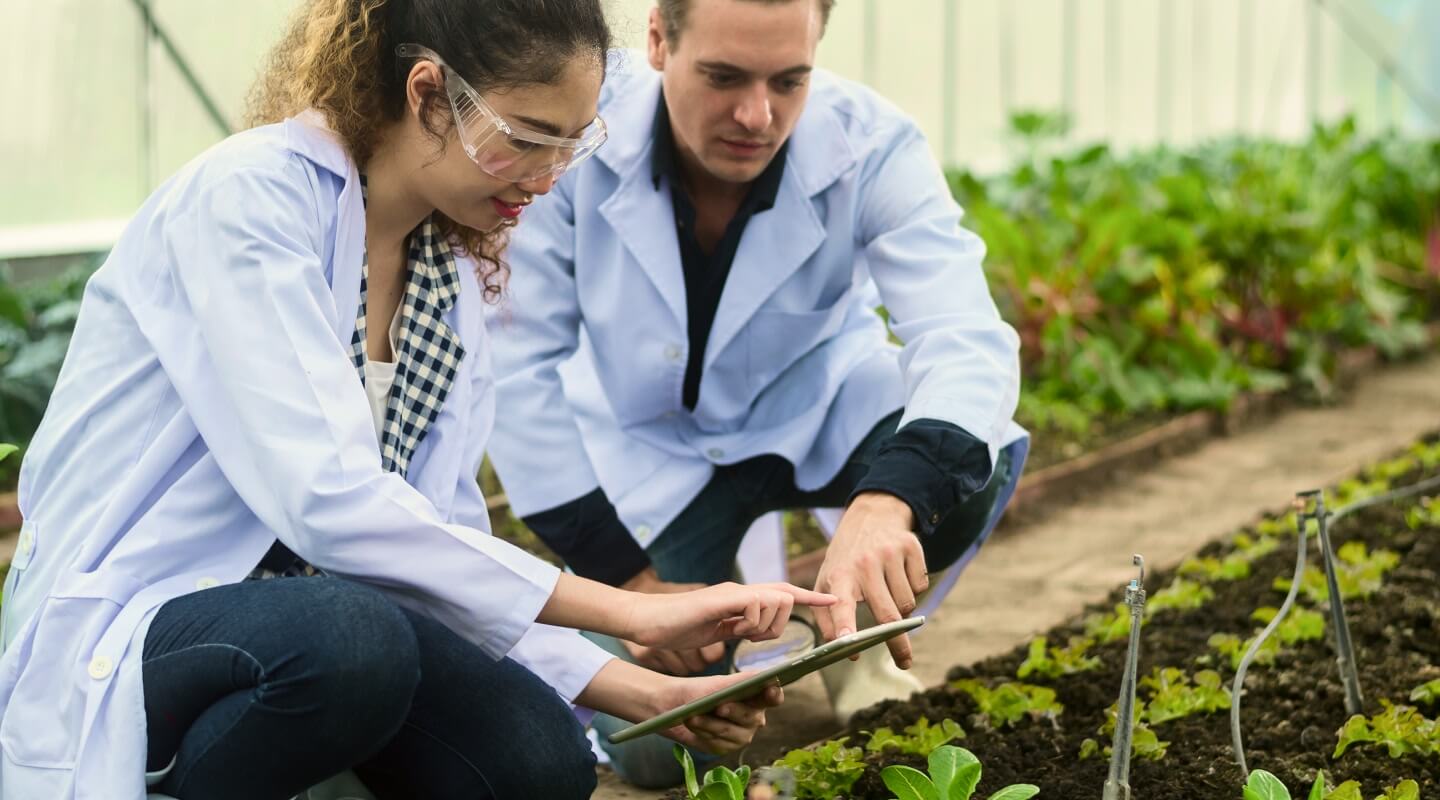
Agriculture has firmly entered the digital age. Over the past decade, precision agriculture has transformed how we grow food by enabling farmers to monitor and manage their operations with unprecedented accuracy and efficiency.
The technology landscape has evolved dramatically, with several key developments shaping modern farming:
- Guidance and Automation: GPS-guided auto-steering is now standard equipment on many farms. USDA surveys from 2016 showed adoption rates reaching 70-80% for major crops like corn and wheat on large operations [1]. This technology reduces overlap in field passes, saving fuel and inputs. Similarly, variable rate technology (VRT), which allows farmers to apply different amounts of seed or fertilizer to different parts of a field, has been adopted on 20-40% of acres for major row crops and continues to grow.
- Remote Sensing and Drones: The cost of aerial monitoring has dropped significantly, making these tools accessible to more farmers. High-resolution imagery from drones and satellites allows early detection of issues like pest infestations or irrigation failures through analysis of reflectance patterns. NDVI (Normalized Difference Vegetation Index) maps are now commonly used to guide in-season management decisions, and AI-powered analysis of imagery has become increasingly sophisticated.
- IoT Sensors and Platforms: Networks of sensors monitoring soil moisture, climate conditions, and irrigation systems have become common fixtures on progressive farms. California specialty crop growers have widely adopted these technologies to comply with water regulations and improve efficiency. The data from these sensors feeds into user-friendly dashboards that give farmers actionable insights in near real-time.
Investment in agricultural technology has been substantial. In 2021 alone, 632 ag-tech startups globally raised $12.2 billion across various categories [2]. This reflects the tremendous potential investors see in digitizing agriculture.
The implications for the agri-food sector are significant:
- First, precision agriculture enables producers to do more with less - applying inputs only where and when needed maximizes yields while minimizing resource use. This addresses both economic pressures (rising input costs) and environmental concerns (reducing runoff and emissions).
- Second, farming is becoming increasingly data-driven. Today's farmers regularly use yield maps, soil data, and weather models to make decisions that were once based primarily on experience and intuition. While this improves risk management, it also requires new skills and a comfort level with technology.
- Third, integration remains challenging. Many farms use different systems for different functions, creating data silos. The industry is pushing toward platforms that can integrate multiple data sources into cohesive insights, while also addressing important questions about data ownership and privacy.
The proposed Plant Innovation Center would be ideally positioned at the intersection of agriculture and technology to accelerate precision agriculture innovation. While its facilities wouldn't be traditional fields, they would provide valuable environments for testing and development.
For example, ag-tech startups developing new crop sensors could test their devices on plants grown in the greenhouse bays, where conditions can be precisely controlled and validated against laboratory analysis. Companies working on agricultural robotics could refine their systems in the semi-controlled environment before moving to full field trials.
Perhaps most importantly, The Plant would bring together agronomists, data scientists, and engineers under one roof, creating an ideal collaborative environment for developing next-generation precision agriculture tools. These cross-disciplinary interactions could lead to innovations that might not emerge in more siloed settings.
The center would also be committed to showcasing these technologies and providing training opportunities. By demonstrating how new tools work and offering hands-on learning experiences, it would help address one of the biggest barriers to adoption: farmers' familiarity and comfort with new technology.
Looking ahead, several priorities will shape the future of precision agriculture:
- First, we need better interoperability and data standards. Systems need to talk to each other seamlessly, and farmers need to maintain control of their data. Innovation centers like the proposed Plant could foster partnerships that promote more open, compatible approaches.
- Second, these technologies must become more accessible to farms of all sizes. The Plant's inclusive approach to innovation would help ensure that solutions are developed for diverse operations, not just the largest producers.
- Finally, the center would focus on integrating emerging technologies like advanced AI, robotics, and distributed ledger systems into agricultural applications. By providing testbeds for these technologies in controlled environments, it would help bridge the gap between concept and field-scale implementation.
For everyone involved in agriculture - from farmers to developers to investors - digital farming is increasingly essential for competitiveness and sustainability. Through its facilities and collaborative community, the proposed Plant Innovation Center would help accelerate precision agriculture solutions that will help feed the world more efficiently and sustainably.
[1] USDA. (2016). Farm Computer Usage and Ownership.
[2] AgFunder. (2022). 2021 AgFunder AgriFoodTech Investment Report.
[1] DTNPF.com, "USDA's Big Precision Tech Study Shows Adoption Is Soaring," 2023.
[2] GlobalAgTechInitiative.com, "2021 AgTech Venture Capital Investment and Exit Roundup," 2021.
.png)
.svg)